Christmas has a cheerful side, with lights, presents and a saint who brings sweets. In the mountain villages of the Alps it also has a shadow. On the night before St. Nicholas Day, the shadow comes down the street on hooves, rattling chains and ringing bells, with a bundle of birch switches in one fist.
His name is Krampus. Our newest design is a full-length portrait of him, and this is the story behind it.
Who is Krampus?
Krampus is a horned, hairy creature from Alpine folklore, best known in Austria, Bavaria, South Tyrol and neighboring regions. He is the dark companion of Saint Nicholas, the fourth-century bishop whose feast day later grew into the Santa Claus tradition. In the old pairing, the saint rewards children who have behaved well, and Krampus deals with the bad children.
The name is usually traced to the old German word Krampen, meaning “claw”. Folk descriptions give him a goat’s horns, a shaggy coat, cloven hooves and a long, lolling tongue. He carries a bundle of sticks, birch branches known as Ruten, to swat naughty children. He drags chains that rattle as he walks, which some folklorists read as the devil bound by the Church. He wears bells, and in many versions he has a wicker basket or a sack on his back for carrying the very worst of them away.
Across European folklore, similar figures walk alongside the saint, such as Knecht Ruprecht in Germany and Père Fouettard in France. Krampus is the most monstrous of them. Where Santa Claus is all reward, Krampus is the warning that comes with it.
Where the legend comes from
People often call Krampus “pre-Christian”, and he may well carry echoes of older pagan traditions: midwinter customs in which masked figures with horns and bells drove away evil spirits and the dark season. But historians disagree about how old he really is, and the written evidence is thinner than the popular story suggests, as Smithsonian Magazine’s history of Krampus explains. What is clear is that this Austrian folk tradition was folded into Christian traditions. By the late Middle Ages Krampus had been paired with Saint Nicholas, a saint honored by the Catholic Church, and from then on the two arrived together each December.
He is often mixed up with the Perchten, the masked figures of the Alpine winter runs around the turn of the year. The two look alike, wearing fur, horns and bells, but they are separate traditions. Krampus belongs to St. Nicholas and early December, and the Perchten belong to the nights after Christmas.
The legend has not always been welcome. In the 1930s Austria’s authoritarian government frowned on Krampus as un-Christian, and a December 1934 New York Times headline reported “Krampus Disliked in Fascist Austria”. The ban didn’t hold, especially in the remote mountain villages, and the tradition carried on.
Krampus Night and the Krampuslauf
The big night is December 5, Krampusnacht, the eve of St. Nicholas Day on December 6. In many Alpine towns, young men dress as Krampus and take to the streets in a Krampuslauf, a Krampus run. They chase spectators, rattle chains and swing switches at bare legs, and the noise of hundreds of bells fills the old town squares.
The costumes are serious craft. Traditional masks are carved by hand from Swiss stone pine, often with real horns, and a single mask can take a skilled carver 20 hours or more. The suits are made of sheep or goat hide, and the heavy bells on the back are part of the look and the sound.
For more than a century, people have also sent Krampuskarten, Krampus greeting cards. They became popular in the 1800s and boomed with the picture-postcard craze of the 1890s, often carrying the cheerful message Gruß vom Krampus, “Greetings from Krampus”. Many show him dragging a child off in his basket. The cards are part of why the image traveled so far, and why Krampus has become a winter favorite far beyond the Alps, with Krampus nights and parades in many American cities and a 2015 Hollywood horror film.
How our artist drew Krampus
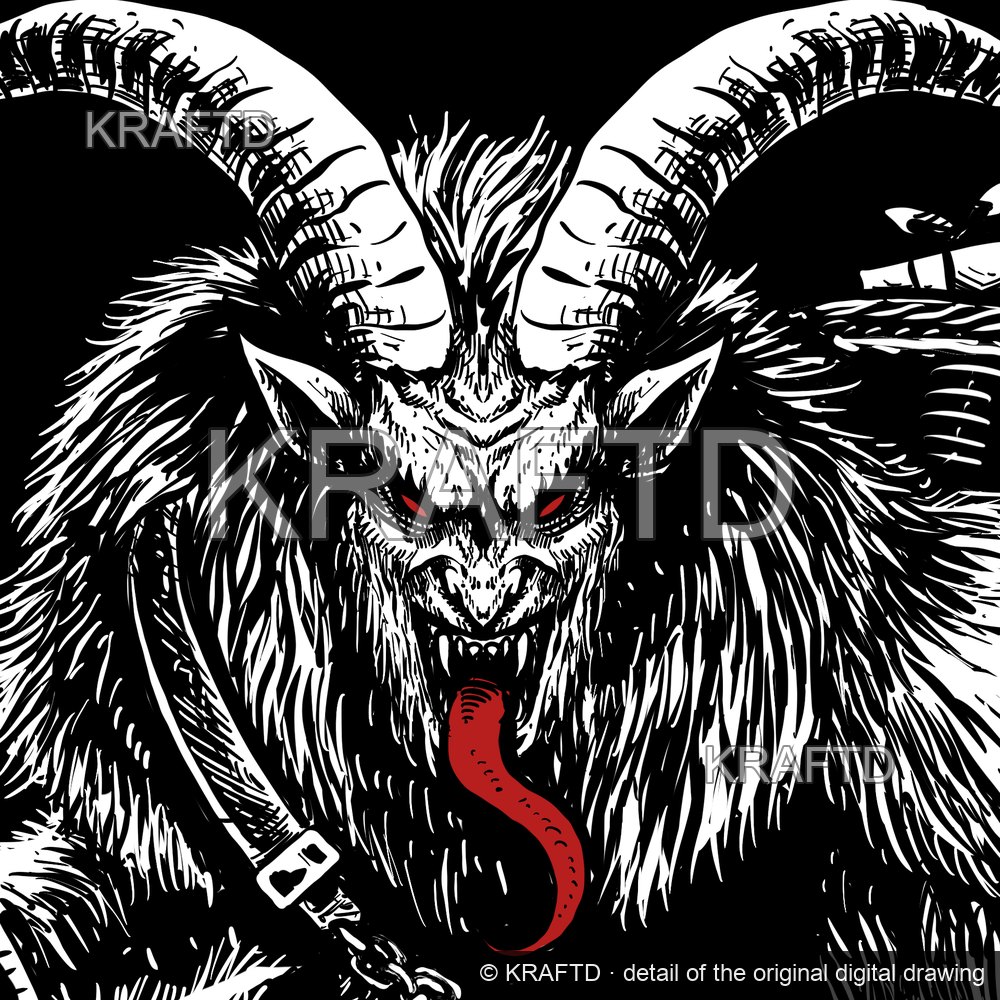
Old Krampus cards are crude and colorful. We wanted the opposite: a Krampus drawn like a page from an old engraved book of monsters, dense with line and lit only by the white of the ink. Our artist drew him digitally, one stroke at a time, with no filters and no flat fills. Look closely and you’ll find all the pieces of the legend:
- Horns and fur. Two long, ridged goat horns sweep out from his skull, and a thick mane of fur covers his head and shoulders. Every strand is a separate line.
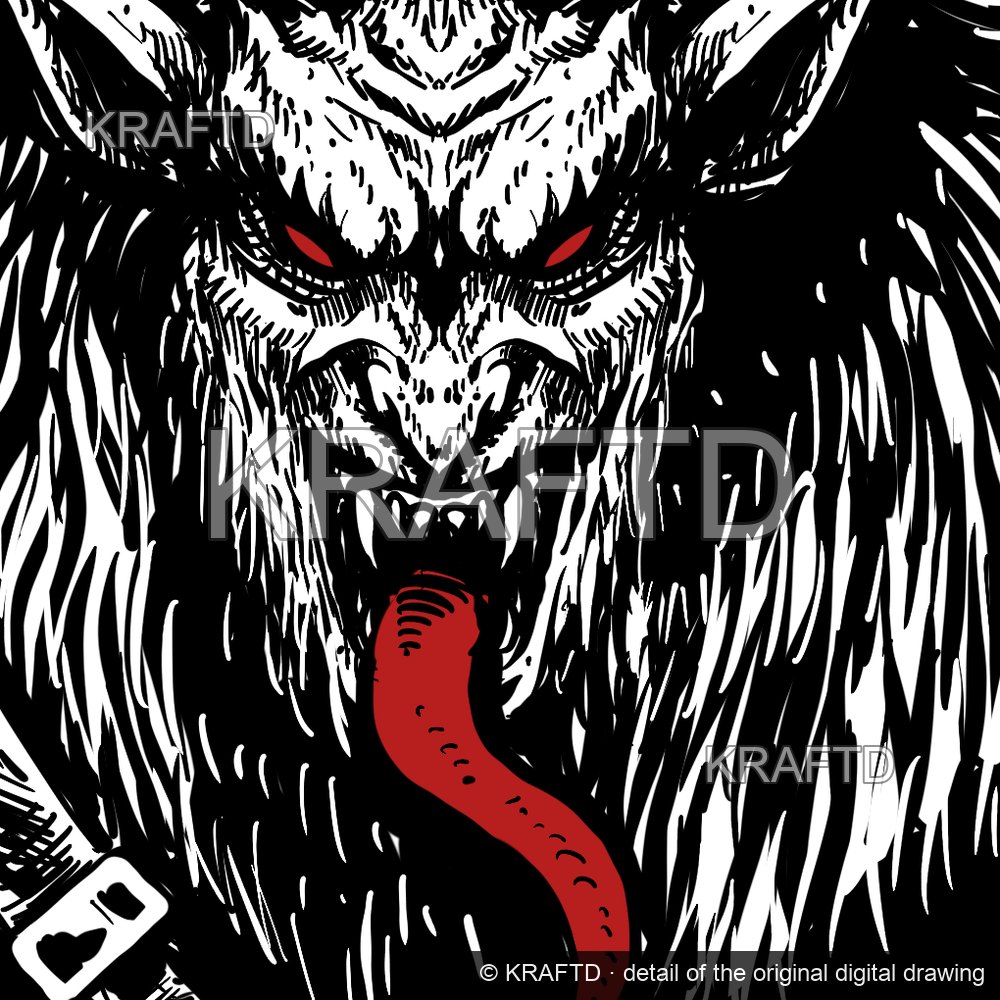
- Red eyes and the tongue. The only color in the piece is red: two burning eyes and a long red tongue hanging past rows of fangs.
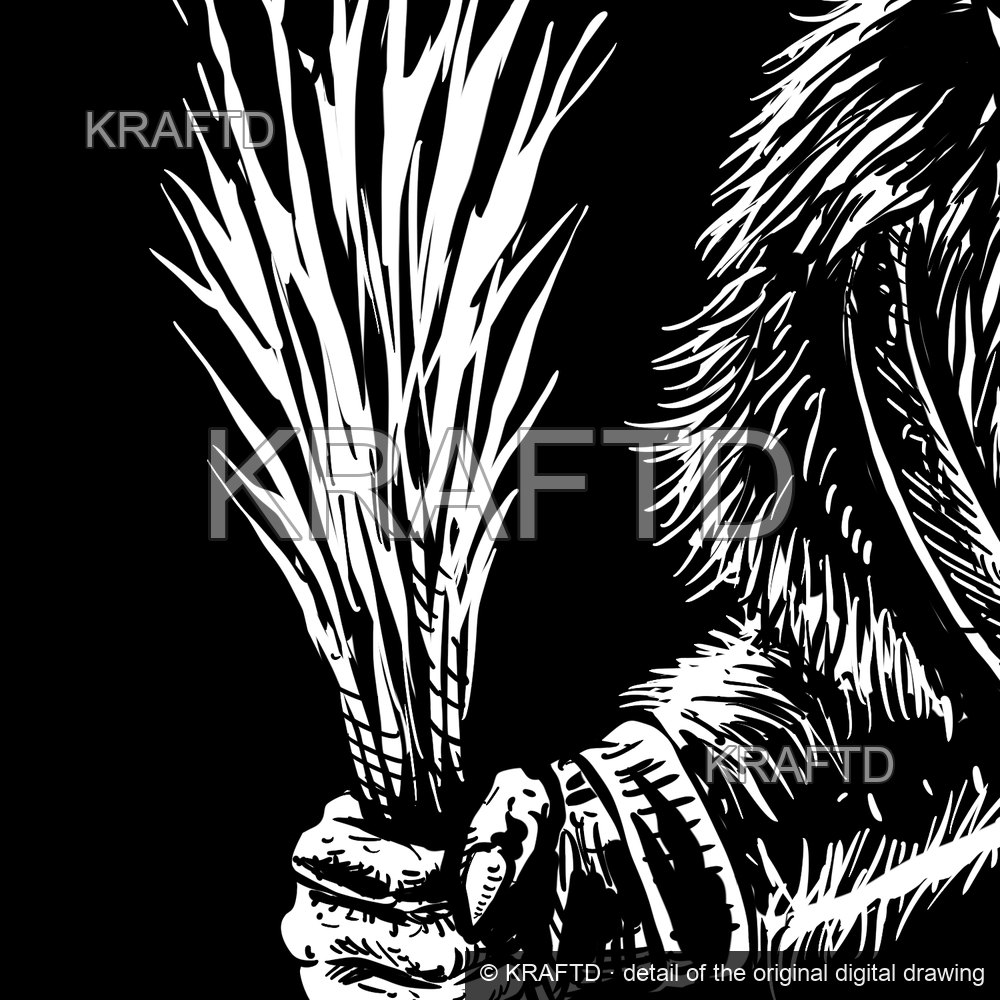
- Birch switches. One fist grips a bundle of birch branches, the Ruten that naughty children feared.
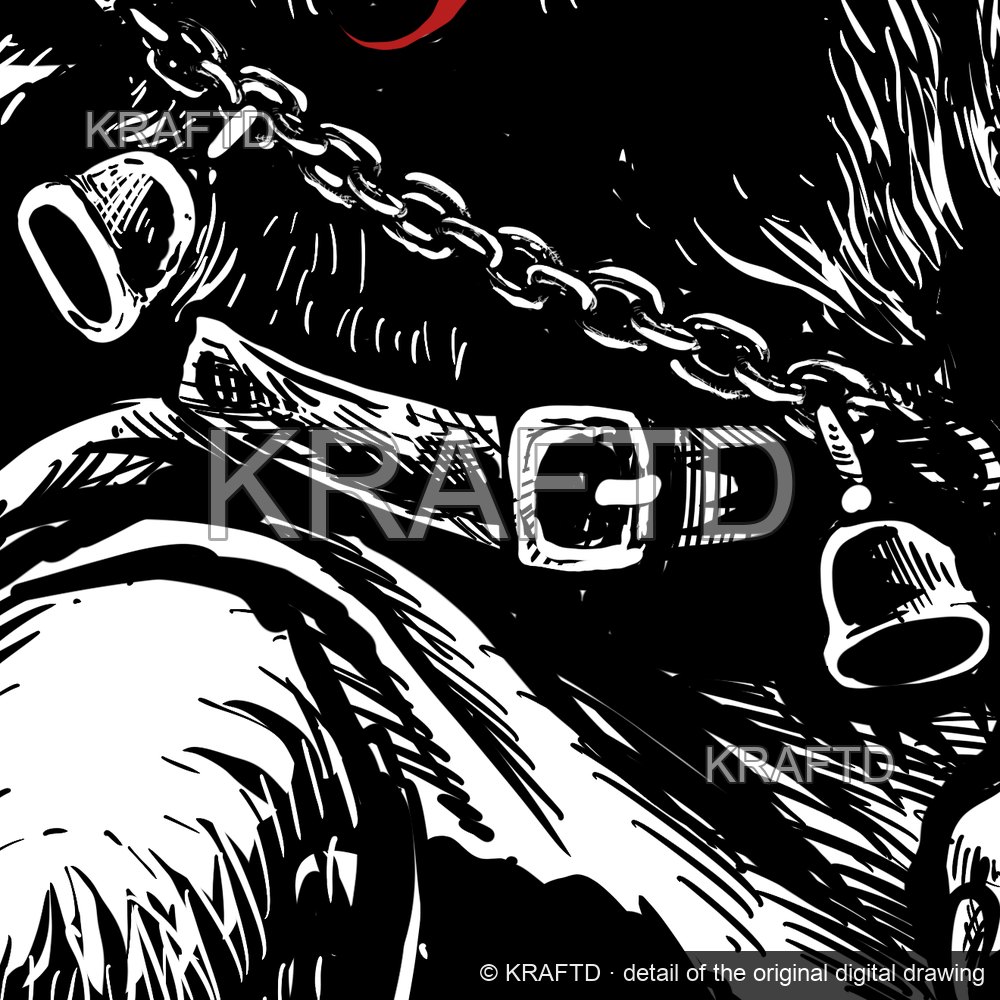
- Chains and bells. A chain loops across his chest, a cowbell hangs from his strap and a smaller bell swings from his belt, so you can almost hear him coming.
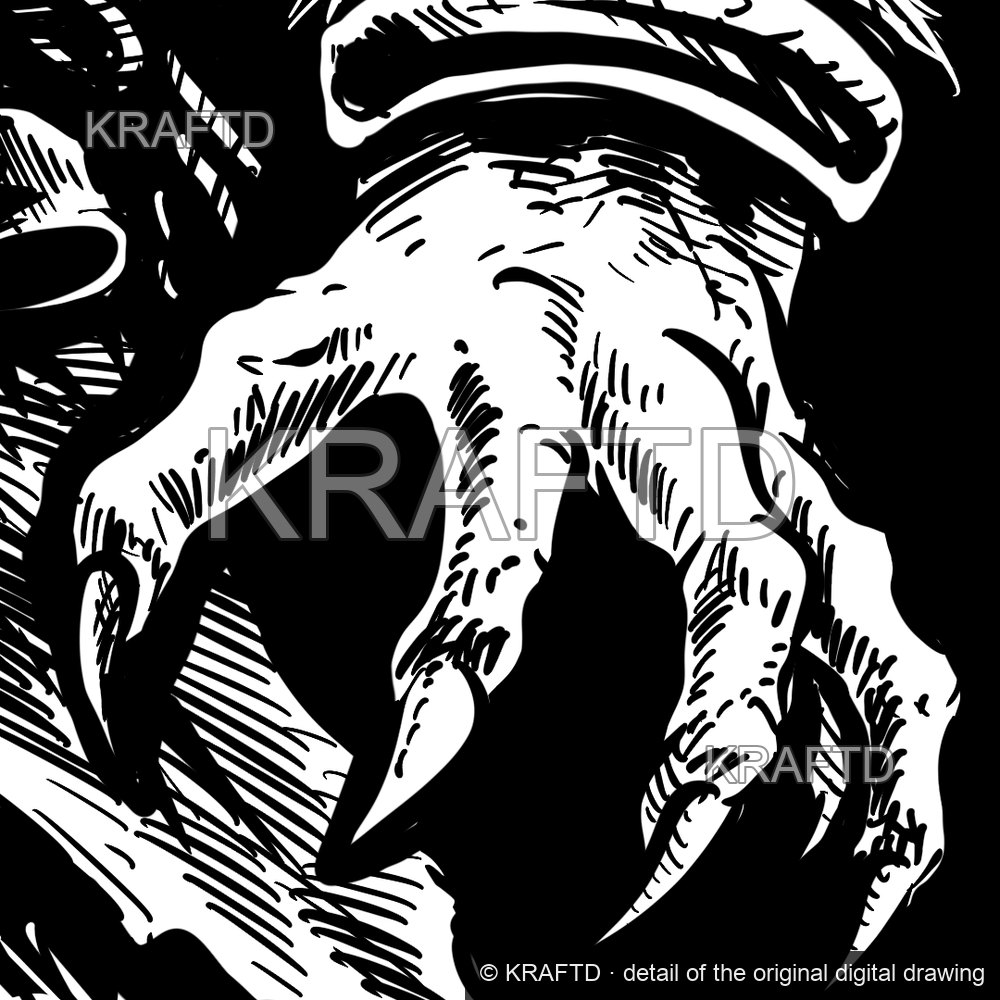
- Claws. His free hand reaches forward with long, hooked claws, a nod to the Krampen in his name.
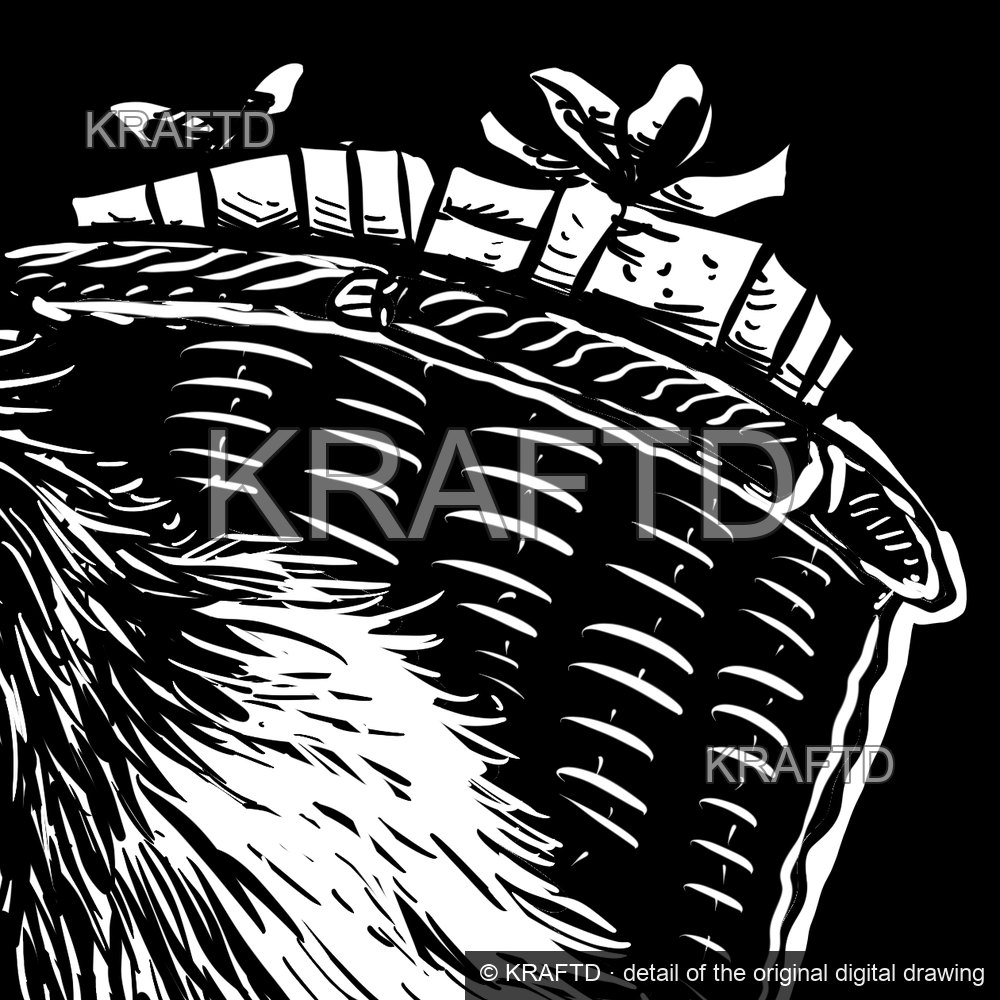
- The basket. A wicker basket rides on his back, the one the old stories say is meant for children who have been very bad. The wrapped presents on top are a twist: nobody knows whose they were.
He crouches mid-stride on frozen, rocky ground with bare branches cracking under his hooves, as if he has just come down the mountain and spotted you.
Why it lives on black
The design prints in white with red accents, so the shirt itself becomes the winter night. On black, the white hatching turns into fur and moonlit horn, and the red eyes and tongue jump out of the dark. That’s why we offer it only in dark colors: black, dark heather and navy.
A tip for keeping a printed shirt sharp: wash it inside out in cold water, skip the high-heat dryer, and never iron directly over the print.
Get the design
The Krampus design is available on Amazon as a t-shirt, hoodie and more, in the US and several other countries. It’s a good one to wear on Krampus Night, or all winter long.
See the Krampus design on Amazon →
More creatures from the same artist are in the KRAFTD design gallery.
Krampus: quick answers
What is the legend of Krampus?
Krampus is a horned, goat-like creature from Alpine folklore who accompanies Saint Nicholas in early December. The saint rewards good children, and Krampus punishes naughty ones with birch switches or carries them off in his basket.
When is Krampus Night?
December 5, the eve of St. Nicholas Day. In German it is called Krampusnacht, and many Alpine towns hold a Krampus run (Krampuslauf) around that date.
What does the name Krampus mean?
It is usually traced to the old German word Krampen, meaning “claw”.
Is Krampus a demon?
He is often called a Christmas demon, and his look borrows from old images of the devil: horns, hooves and a long tongue. In the folk tradition, though, he works for St. Nicholas as a punisher of bad behavior.
Where is Krampus celebrated?
Mainly in Austria, southern Germany (especially Bavaria), South Tyrol in Italy and nearby regions. Krampus nights and parades are now held in many other countries, including the United States.
Who drew the KRAFTD Krampus design?
KRAFTD’s own artist drew it digitally, line by line, in white with red accents. It’s sold only under the KRAFTD name.
As an Amazon Associate, KRAFTD earns from qualifying purchases.